Our Town
Alton is a historic market town, with roots dating back to Roman and Saxon times. Its name is thought to be derived from ‘Aewielltun’, an Anglo-Saxon word meaning ‘farmstead at the source of the river’, which references the River Wey, which rises close by. By the time of the Doomsday Book of 1086 it was known as Aoltone The first recorded market in Alton was in 1232 and a weekly market and monthly farmers’ market continue to this day.
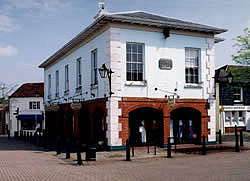
Though Alton has expanded in recent years to a population of some 20,000, it has retained its charm and contains many notable Georgian buildings. Altonians are blessed with a wide range of clubs and associations offering a huge variety of activities – sporting, cultural and educational. Not least, the town is surrounded by beautiful countryside, including the South Downs National Park, and has become an important walking centre, with a month-long Walking Festival in May and a shorter one in October.
Close by is the attractive village of Chawton, which draws many visitors to Jane Austen’s house, where she lived from 1809 until her death in 1817, and where she wrote most of her novels. The more grand Chawton House, where her brother lived, is also well worth a visit. In honour of Jane Austen, Alton holds a Regency Week each year in June.
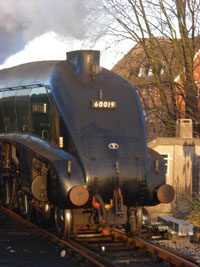
Another major attraction is the Watercress Line, so-called because it used to transport fresh watercress to London. It is largely run by volunteers, with steam trains on the 10 mile track from Alton to Alresford.
About the year 1320 King Edward II presented the town with a charter giving it the right to hold an annual fair - mainly for cattle and toys. The fair (although now a fun fair) still comes to Alton today.
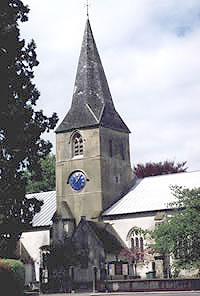
The Parish Church of St Lawrence is an example of the Perpendicular style found in Hampshire although the tower can be dated to the Norman period. This is one of several churches in Alton. In 1643, during the Civil War, a battle was fought around Alton. The final scenes took place in St. Lawrence's when the Royalist leader, Colonel Bolle, was shot. Holes from musket shot can still be seen in the Church door.
In 1867 the brutal murder of Fanny Adams, aged 8, by Solicitor's Clerk, Frederick Baker, took place in Flood Meadows, near to the Church. We are still reminded of this horrific Victorian tragedy, as the colloquial expression "Sweet FA" originates from this event.